Obviously it's been awhile. :)
A lot has changed for me in a year... (almost done with my Master's of Instructional Technology degree, teaching technology PD for my district and others, in my first year of teaching in a 1:1 iPad classroom, etc...)
All of these changes have now brought me back to this blog, with an idea for a change in direction.
Let me start by telling you all this: at the beginning of this year, I had a class set of iPads. I was already 1 year into my graduate degree and 1 year into my position as Innovation Coach in my district (a technology teacher-leader). And yet, even with all these amazing devices at my fingertips, I found myself barely using them, and even when I did use them, it wasn't for the type of transformational change that I had always thought and taught about. I came home feeling guilty, that guilt magnified every time someone referred to me as a "technology guru"or something along those lines. What right did I have to call myself an expert in instructional technology when all I was doing with these iPads was playing games?
All that changed right before winter break this year. I attended an awesome conference, and while I was there, I made a list - I took everything that I had learned about quality technology integration and iPad usage in the classroom, applied it to MY classroom, and then made a list of all the things I wanted to do, in order.
Since then, I have been implementing these projects one by one. Some of the projects are just logistical things to make my and my students' lives easier, but others really are stepping in the direction of that transformational change I've always been so excited about.
I have to tell you: it has made a BIG difference. First of all, I have come home from school every day happy and excited instead of frustrated. Wow! That's huge. Also, and I know this sounds like a cliche that can't possibly true... but since I decided to go whole-hog into this technology integration idea and changing the way I do business in my classroom, I have not had a single serious behavior problem, and the work that my students are creating blows me away. Not to mention that when we do things in class that aren't technology related, even then they are more focused and engaged in the activity.
As I'm ending my master's degree, one of my final projects is going to be to keep my colleagues updated on the things I'm doing in my classroom. I have a unique position in that I am not a full-time trainer, I am still a teacher, as well as being a technology coach. I think it would be really beneficial for my fellow teachers to see what I'm doing, to make it easier for them to envision it working in their own classrooms.
So, I've decided to renew this blog, with a new focus on my technology-related projects in the classroom. Of course if some brilliant idea strikes me that's not technology-related I may still blog about it - technology isn't the answer to everything, after all! But I truly believe that I have found my calling in life, and I'm excited to use this blog as a vehicle for sharing my ideas.
Tuesday, January 14, 2014
Sunday, February 24, 2013
Motivating the young'uns...
Well it's been awhile!
I blame it on parent/teacher conferences... not really, those are actually this week, so I'm not sure why I'm making a post before this heinous week! haha ;)
We've been talking a lot at my school recently about motivating students to do their best on standardized assessments. All of us as educators know how unfair these can be... how it's such a slim snap shot of what a child is capable of, and how unfair it is to judge a child based on a few questions during a few hours of their educational career. That being said, those tests aren't going away! And we have to come up with ways to motivate our students, to see the value of those tests, and to help them understand why they take them and what we are looking for.
Our district takes the MAPS assessment 3 times a year, and as those of you who use this test know, what we look for most is growth and improvement. Each child has a "targeted growth" score, which is the goal that NWEA sets for them based on their previous performances of what they should achieve by the end of the school year.
Of course, I spend time before the test talking about it with my students - I'm pretty frank in explaining why we take it ("We teachers are looking to see if you're learning everything a 4th grader should be learning, and if you're improving - the point isn't getting the highest score, but in beating your previous score") and we set goals together (I blogged before about my goal-setting worksheet found here).
So how do I motivate them to take the test?
...candy, of course!
After the test, each student receives a little baggie, with a candy (either M&Ms or Skittles) for each point they improved on the math and reading tests combined, along with a cookie and a note saying "You are one smart cookie!" - an idea I cannot take credit for, as I borrowed it from my awesome coworkers.
In an ideal world, this motivation would be intrinsic - obviously I want my students to WANT to learn and grow and improve. But again - this is the real world. And in the real world, studies show that kids in poverty (like the kids I teach) do not look at long-term consequences, either positive or negative - they live in RIGHT NOW... and right now they want some candy.
Besides, it's a great visual - although some might balk at the fact that some students receive baggies full of candy while others receive only a few small pieces - it's a great visual representation and reward for how hard they have worked.
It's not ideal... but on my MAPS test this winter, my students earned a total of 361 candies for points improved in math and reading! I'm very proud of them for that.
Friday, December 7, 2012
Long time no see!
Okay, so it's been awhile... I blame it on the holiday season. (Plus my crazy job... plus grad school... plus tutoring... etc etc etc, you get the picture).
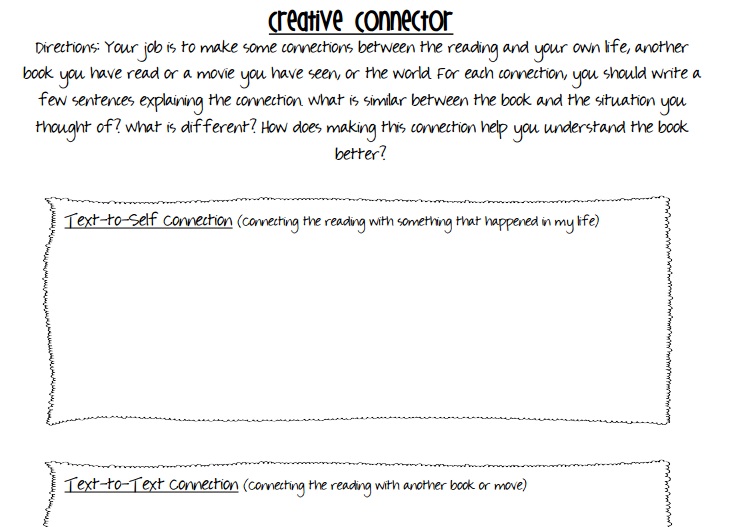
I did have time to add something to my Teachers Pay Teachers store today... Literature Circle role sheets!
Literature Circles are one of the (unfortunately few) concrete ideas that I learned about in college, and actually do use every year. For those of you who don't know, Literature Circles are a way to organize a novel study which encourages students to engage in authentic conversation about a book. As we know, as adults we rarely answer meaningless questions about the books we read... but instead, we discuss what we read in book clubs, with friends, or just in conversation with others.
With the Literature Circles format, each student has a role that they fulfill while reading the novel (or portion of a novel), and then they contribute to the conversation from the viewpoint of that role. There are lots of different roles that I've seen out there, but the ones that I stick to are...
Story Summarizer (this person summarizes the characters, setting, and plot of the reading)
Word Watcher (this role involves looking up definitions of vocabulary words from the reading)
Question Creator (this student needs to create and answer thought-provoking questions about the reading)
Creative Connector (this person comes up with a few different text-to-self, text-to-text, and text-to-world connections about the reading)
Imaginative Illustrator (to draw a picture of how they imagined a scene from the book)
...and, of course you need a Circle Supervisor (to keep the conversation focused and moving, and to make sure that everyone is participating equally)
The goal is for students to eventually be able to hold a meaningful conversation, with everyone participating equally, without teacher guidance... eventually. It usually takes quite a bit of practice to get my students there... we did one round of Literature Circles with The Lion, the Witch, and the Wardrobe (we used a condensed version of the Literature Circle worksheets, which is a FREEBIE that you can find here)... One of my main focuses the first time around with my students was building on what the last person said, rather than each person just saying their two cents without anyone else really paying attention. But once you see that the students are really able to dig into a cool book, it is really cool to see!
Next up, my students are going to tackle The Giver. We're going whole hog this time - the full role sheets, and hopefully I truly will be handing off the conversation to be fully student-led! (We'll see... it's not always easy for me to fully let go of the control! ha)
Monday, October 29, 2012
Good Morning, Friends!
Another day, another night, another blog entry... another great idea from my mom. :)
My first year of teaching, my mom gave me the idea for putting a morning greeting up on the SmartBoard every day. It's a great way to get kids engaged as soon as they walk in the door, and to make them feel welcome in our classroom.
So I spent my first few years building up a collection, and now, every morning when my students walk in there's a colorful and fun greeting on the SmartBoard for them to respond to. Sometimes they answer a question (like the one in a picture above), sometimes they do an activity (some academic and some not), and sometimes they just read a greeting from me.
The kids love these! They love responding themselves, and they love seeing what their friends said. At open house, I promise the kids that they will touch the SmartBoard every single day - and this makes sure that that's true!
I've posted a month's worth of premade morning greetings using Smart Notebook software up on my store on Teachers Pay Teachers, and I plan on continuing to do this - posting a month's worth of premade (but editable) greetings for teachers to use with their classes.
http://www.teacherspayteachers.com/Product/Daily-Morning-Greetings-for-SmartBoard
Hope you enjoy these as much as my class does!
-Michele :)
Friday, October 26, 2012
Frobscottle and Whizzpoppers!
Happy Friday, friends!
I love Roald Dahl. His books are so creative and so fun, for kids (and adults!) of all ages.
When I first started teaching, my mom suggested that I start out the year with The BFG by Roald Dahl as my first read aloud. She said it's funny, the kids love it, and it's a great way to start out the year - great advice! What a great mom. :)
Last year, after reading the BFG, my class had won a reward for showing good behavior, so we made it into a BFG movie-watching party, complete with Frobscottle. (I made sure to tell them that this frobscottle would NOT make them whizzpop!)
(I got the movie off of Amazon... http://www.amazon.com/Roald-Dahls-The-Friendly-Giant/dp/B000FOQ02I/ref=sr_1_2?ie=UTF8&qid=1351303560&sr=8-2&keywords=the+BFG)
After we finished the novel my first year, I developed some extension activities using The BFG as inspiration. I focused on creative writing, so all the options for their extension project include writing to some extent, but in different forms. The kids have really gotten into it every year!
Some of the activities include creating their own giant to fit in with the story, retelling the story (or parts of the story) from the perspective of a different character, or inventing dreams and their labels for the BFG's jar. Another one is to use the fun made-up words that the BFG uses and give them definitions based on how the BFG uses them.
Guess where you can find not only the description of the projects, but all the materials you need to have your students complete the projects AND a rubric to grade them?
What a day. I'm excited for the weekend! :)
-Michele
Tuesday, October 23, 2012
Classroom Management
Another week on the job, friends! :)
Last year we implemented the "stoplight" behavior management system that I'm sure many of you are familiar with. Students start the day on "Green" (meaning, they are following all of our set PBIS expectations). If something happens over the course of the day, a child is moved to "Yellow" (meaning, slow down! Make a better choice!) and if the problem behavior continues, they move to "Red" (stop immediately and change what you're doing). I do allow the kids to earn their way back to green by taking responsibility for their actions and making a better choice.
This year we added another color - "Purple!" Our high school's mascot is the Purple Knight, so we use purple to indicate someone who is going above and beyond what is expected, who is being a true leader.
At the end of the day, we fill out a Weekly Progress Report. Here's what that looks like:
As you can see, there's a box for each day, which they color whatever color they ended the day on. (I know other teachers who, if the student changed colors throughout the day but earned their way back to green, has them color the box a couple different colors to indicate that). They also have to write one positive thing that happened that day.
I keep the Weekly Progress Reports in their Friday Folders. We fill them out each day, and then on Friday the students take them home and get them signed so parents know how the week went with their behavior.
I also have a box on this sheet where I write any missing class work or homework, and I staple the work to the page. There's also a box for Teacher Comments (I'll write questions, reminders about conferences, positive praise, explanations of why a student changed colors, etc) and a box for Parent Comments.
Lastly, at the bottom, I have the parent, student AND myself sign them, to show that we are all working together for the student's success!
Wondering where you can get a copy of this worksheet? Guess what... it's FREE! Check out my Teachers Pay Teachers page!
http://www.teacherspayteachers.com/Store/Michele-Kruse
Enjoy! :)
Michele
Friday, October 12, 2012
Election season!
Hi friends. :)
What a busy week! I had parent/teacher conferences this week, which consumed most of my time. Feeling like now I can finally enjoy our beautiful fall weather!
Ahh, fall... brings thoughts of caramel apples... cozy scarves... leaves changing color... hot cider with cinnamon... boots and sweaters... and... ELECTION!
I know, some of us are already sick of the political talk going around Facebook, TV, news, etc... But let's face it: our students are excited about it! And part of our job as teachers is to educate them on the many rights of citizens... including the very important right to vote.
I've always had an interest in politics - Political Science was one of my favorite courses in college. I suppose that teaching about elections gives me hope for the future - maybe one day, one of these students can make a change for the better in our political system. :)
Anyway... I came up with some ideas for teaching this election unit in my classroom.We started setting the groundwork a few weeks ago by reviewing the 3 Branches of Government (which they learned in the previous grade level). The big hit was a drama I did in which I split the class into 3 groups (Congress, President and Cabinet, and Supreme Court) and we acted out passing a law. The kids really got into that - especially the part where they elected classmates into the Presidency and into Congress by voting!
First up in our look at the presidential election: an adorable read aloud. Grace for President by Kelly DiPucchio.
I made up a few reflection questions to go with the story that I think we'll discuss as a group after reading the story. What I love about the book is that it is PERFECT for illustrating the Electoral College! It really is a must read for any elementary teacher who wants to cover elections.
So this is my next step: filling out a Presidential Election Timeline with all the events leading up to (and following) the election. The picture above is the teacher's guide version - I'm going to be giving students a blank timeline to fill out. We're going to be reading an article I found while we do it, but a lot of this will be filled in just through discussion.
On the opposite side of the timeline is this cute little worksheet I created, where we are going to define a few important terms relating to presidential elections.
Next, a graphic organizer that students will use to research a presidential candidate of their choice. (Of course, I'll make sure we have equal representation of all candidates in this portion). Then, we'll get together as a class and compare all the candidates - similarities, differences, etc.
Last up, to tie it all together: a homework assignment. I will ask students to interview a parent or other adult in their family about elections. I really think this is key: opening that door to communication between children and parents. It's tricky to teach about elections because they can be so value-based, and for me, I feel good about opening these lines of communication and including the parent in the child's education.
So... I bet you're wondering where to get all these awesome assignments, right?!?! Well let me tell you... At my Teachers Pay Teachers store! :)
http://www.teacherspayteachers.com/Store/Michele-Kruse
In summary: drink your cider, cuddle up in your sweater, and enjoy it, because before we know it, these election shenanigans will be over and it will be time for the long winter. :)
Michele
Subscribe to:
Posts (Atom)